
The Asymmetric Verification Trap: Why AI Coding Is Burning Out Senior Engineers
When generating code costs nothing, human verification becomes the ultimate engineering bottleneck. Here is how to architect cognitive guardrails into your workflow

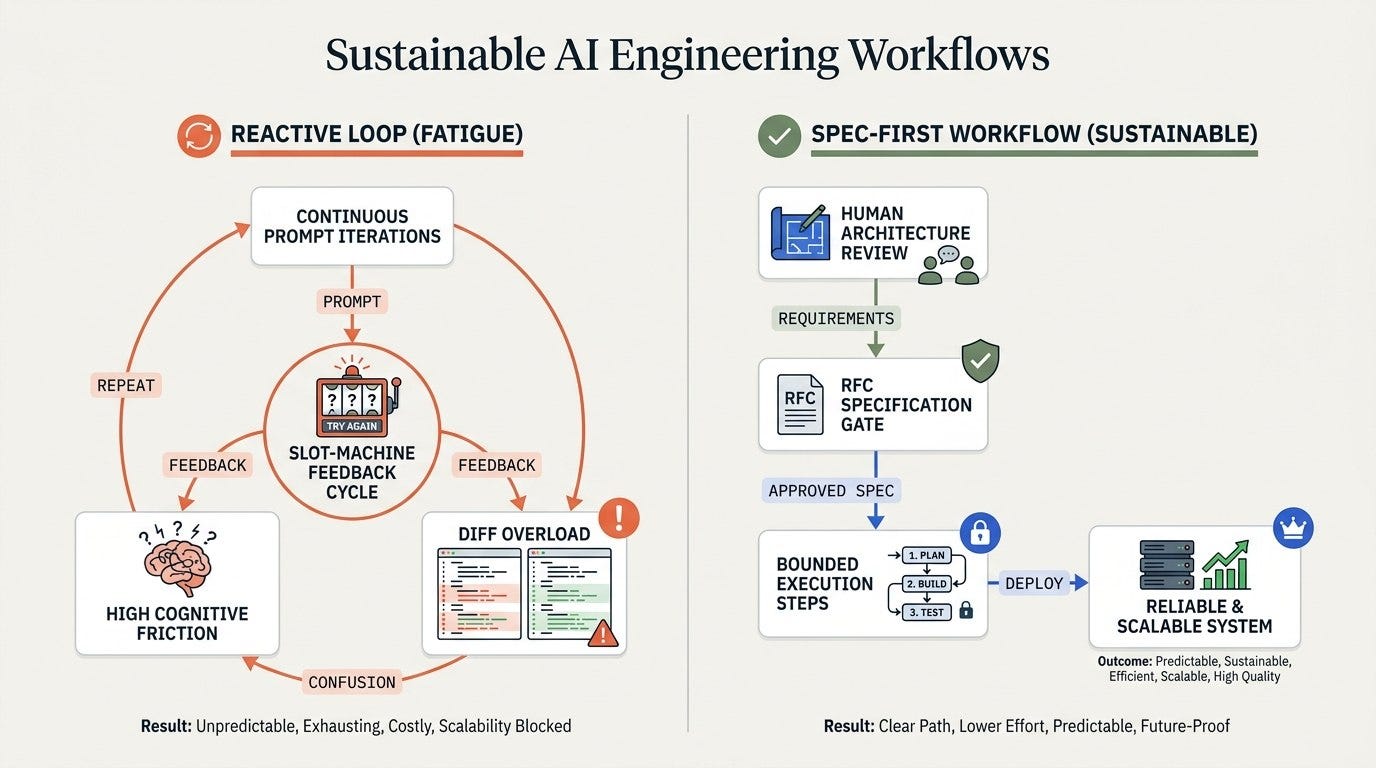
TL;DR: AI tools haven’t reduced developer workloads; they have transformed the nature of engineering from authoring code to high-frequency diff verification. Generating code is O(1) in cognitive effort, but verifying correctness remains O(N). To prevent burnout and cognitive fatigue, engineering workflows must shift from reactive prompt-and-pray loops to spec-driven bounded orchestration.
The 2:00 AM Token Treadmill
In a recent survey of nearly 1,300 developers conducted by Syntax, 46% of respondents admitted they regularly blow past their intended stopping point when coding with AI agents. Among those developers, 58% reported noticeable sleep degradation, racing thoughts, and difficulty disconnecting.
At first glance, this sounds like a familiar story of developer overwork. But the underlying mechanics are fundamentally different from traditional crunch time.
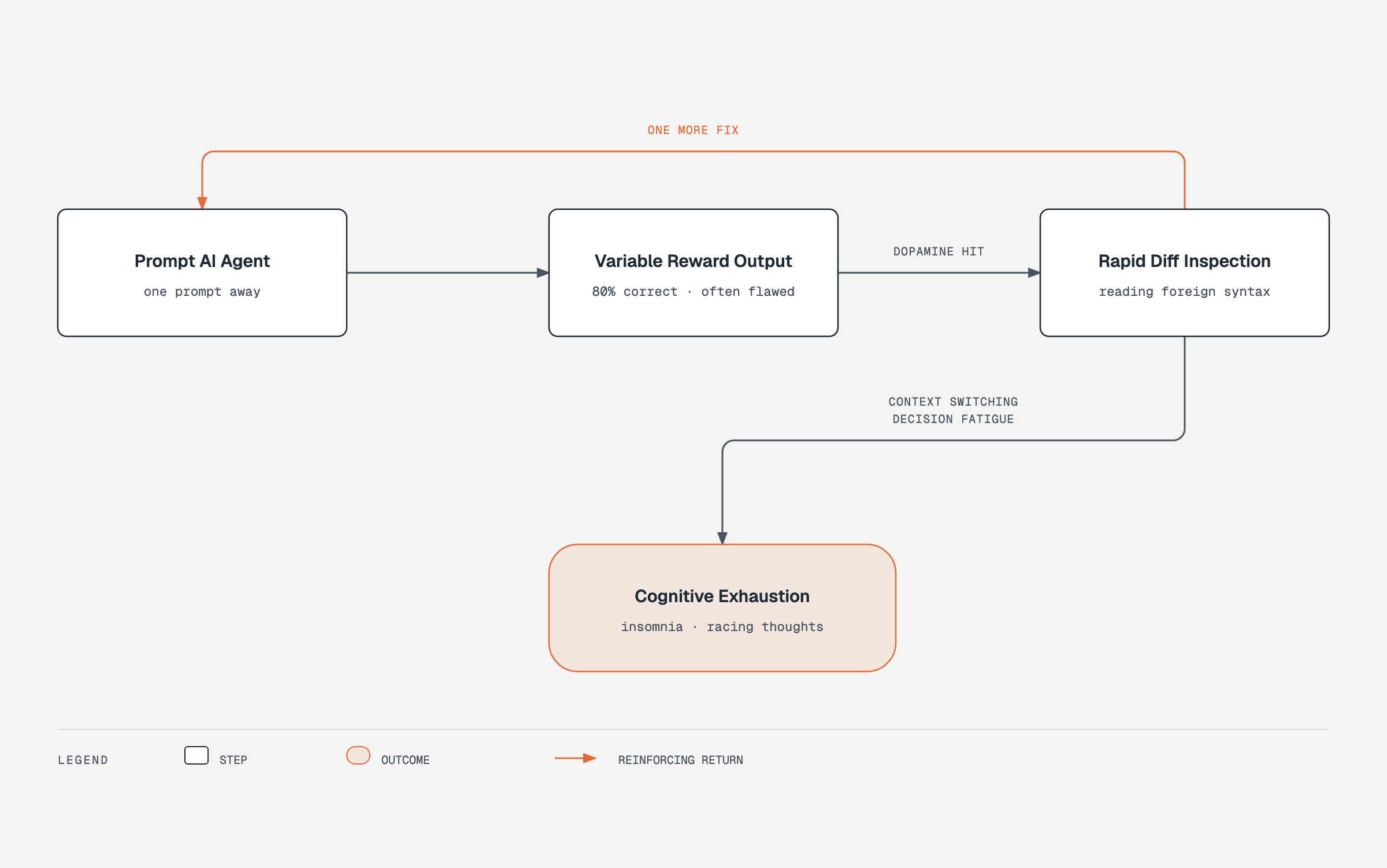
Figure 1: The variable-reward dopamine loop in iterative AI prompting.
In classic software engineering, productivity was constrained by manual typing, syntax lookup, and local iteration cycles. Fatigue was self-limiting: when your brain grew tired, your typing slowed down, debugging stalled, and you naturally stepped away from the keyboard.
AI prompting breaks that natural governor. It introduces an intermittent variable-reward loop—the exact psychological mechanism behind slot machines. You submit a prompt, wait three seconds, and receive 200 lines of code. Sometimes the output works out of the box; more often, it is subtly flawed. Because you are only ever “one prompt away” from the solution, you press the lever again.
What feels like high-leverage building in the moment frequently leaves engineers cognitively depleted by morning.
The Jevons Paradox of Code Generation
According to data cited from the 2026 AI Index Report, developers using AI assistants like GitHub Copilot completed 26% more pull requests than those working without them. Yet in the Syntax survey, 65% of developers reported feeling more daily pressure to produce, not less.
This is a textbook manifestation of Jevons Paradox: increasing the efficiency of a resource (in this case, token generation) increases total consumption rather than conserving it.
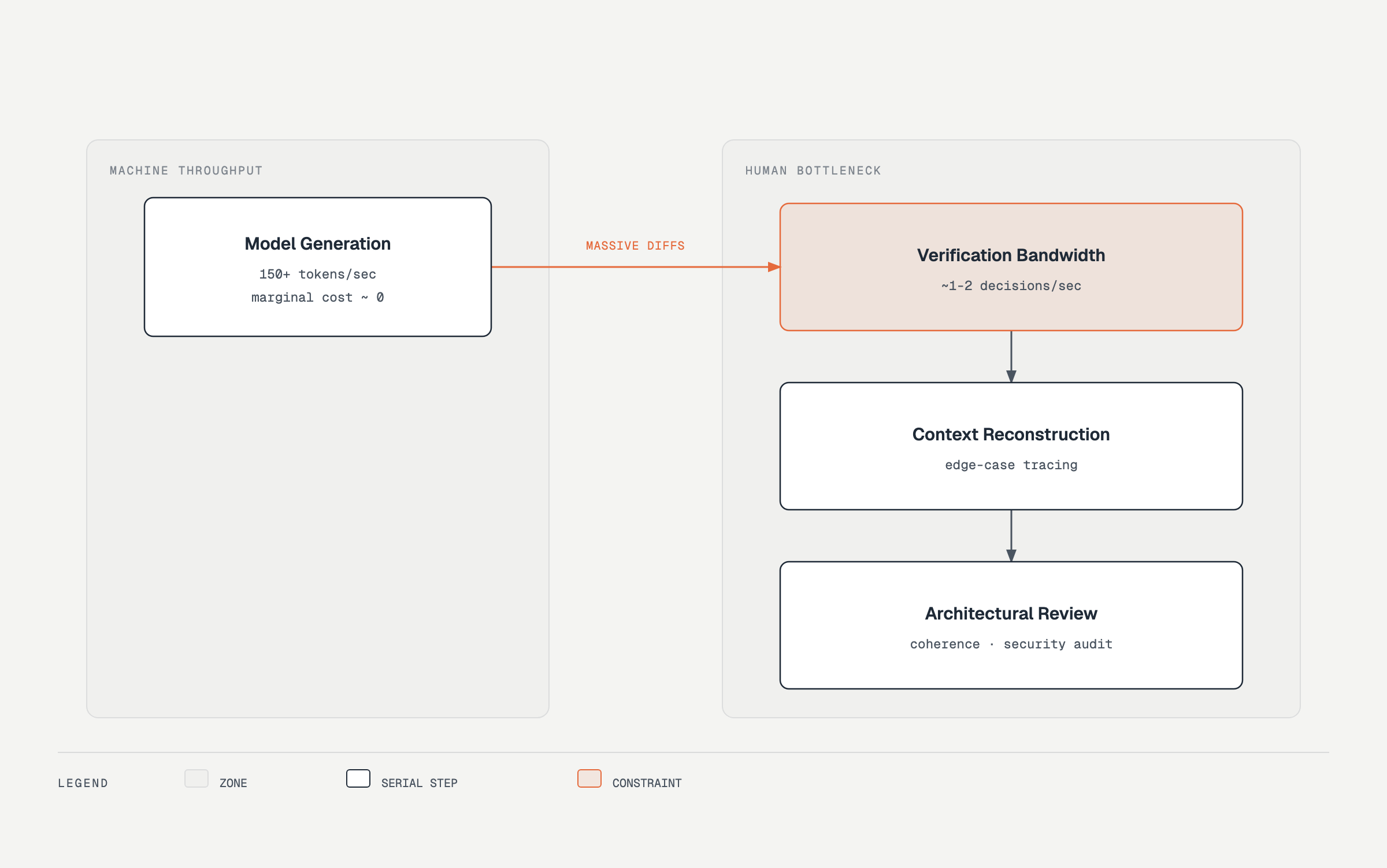
Figure 2: The throughput mismatch between machine generation and human cognitive verification.
When generating code becomes zero-cost, the system’s throughput constraint moves downstream. You no longer spend your day in deep flow states writing logic. Instead, you spend hours acting as an asynchronous, high-speed code reviewer:
Reviewing foreign syntax: Reading code written by an external entity requires significantly more cognitive parsing than reading code you conceived yourself.
Context reconstruction: Every rejected diff forces you to re-evaluate the model’s assumptions against the entire project’s invariants.
Decision fatigue: Deciding whether a 40-line refactor handles subtle race conditions 30 times a day rapidly exhausts your executive function.
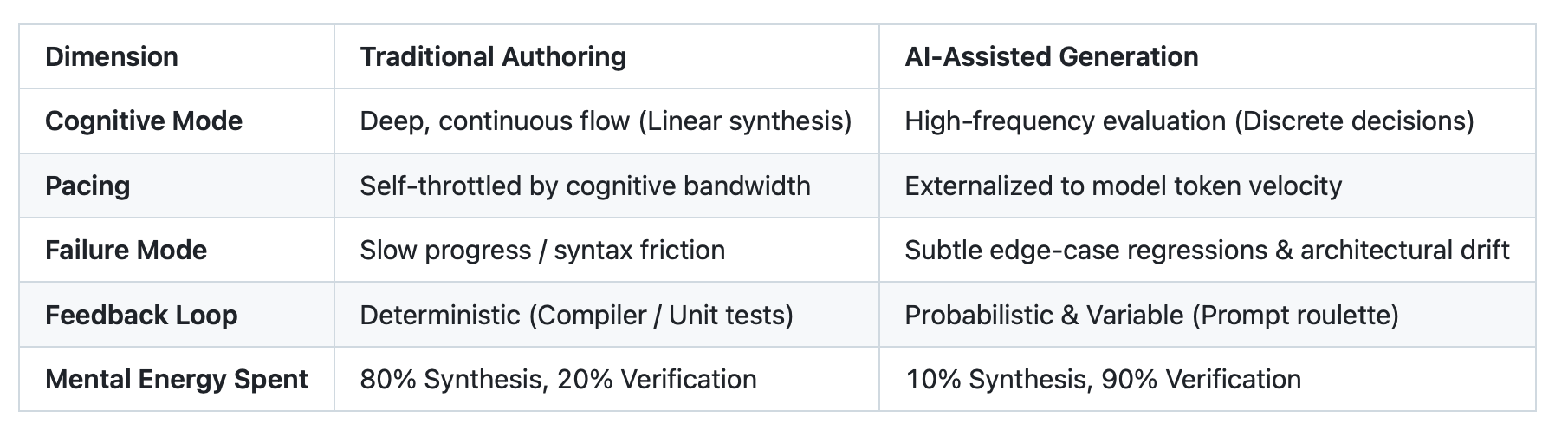
The table below illustrates why this shift drains cognitive reserves so aggressively:
The Multi-Agent Concurrency Trap
The problem compounds exponentially when developers transition from single-prompt assistants to multi-agent concurrency.
When local CLI tools and agent harnesses allow you to spin up three or four background sessions simultaneously—one refactoring database queries, one writing unit tests, another migrating an API—the illusion of infinite leverage collapses under human context thrashing.
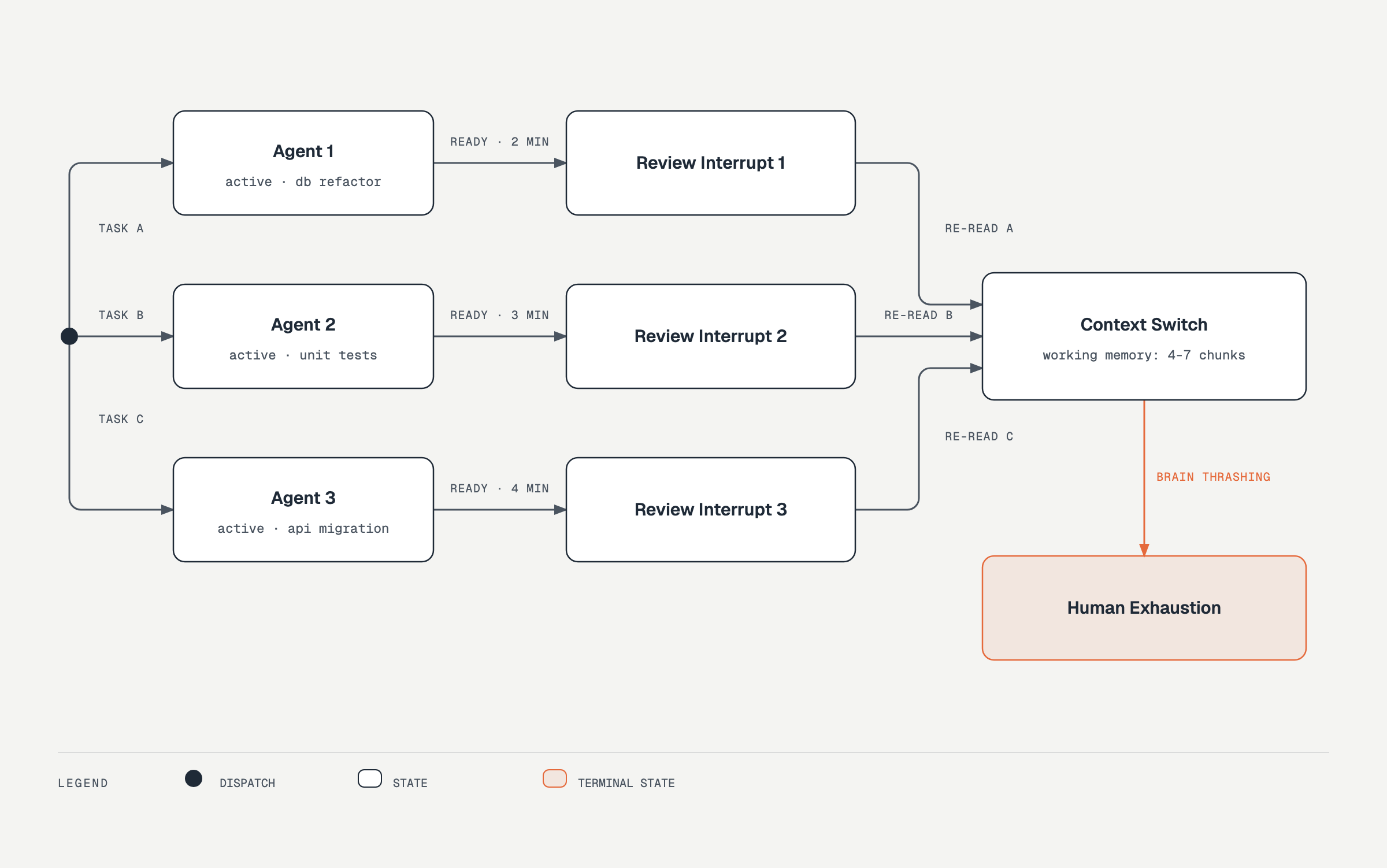
Figure 3: Multi-agent concurrency creates continuous context thrashing for the human verifier.
Human working memory operates with a strict limit of roughly 4–7 chunks. When four agents return diffs asynchronously within minutes of each other, the human engineer is subjected to continuous micro-interruptions. Each diff requires reconstructing a separate mental model of the problem space.
In the survey data, developers who routinely ran multiple parallel agent tasks showed the highest correlation with chronic fatigue and diminished subjective enjoyment of programming (54% reported reduced joy; 59% reported feeling their native skills were slipping).
Defensive Engineering: Three Architectural Guardrails
Senior engineers who have adapted sustainably to agentic tools do not rely on raw willpower or “digital detox” platitudes. They design explicit structural boundaries into their engineering pipelines.
1. The Spec-First RFC Barrier (Treating AI as a Junior Dev)
Mark Erikson, long-time maintainer of Redux, approaches agent interaction through an inverted workflow:
“AI gives you a result, but a result isn’t an answer yet. It becomes one when a person evaluates it and takes responsibility for it.”
Instead of letting an agent edit files directly upon a broad prompt:
Phase A (Research & Plan): Instruct the agent to read repository files and draft a dedicated design RFC or markdown specification explaining the proposed changes.
Phase B (Human Gate): The human engineer reviews the design document, aligns on architecture, and refines the approach before any code is generated.
Phase C (Bounded Execution): The agent executes the change in small, isolated subtasks against the verified spec.
<!-- Bad: Reactive Probing -->
Prompt: "Refactor the auth middleware to support OAuth2 tokens and session invalidation."

<!-- Good: Spec-First Protocol -->
Prompt 1: "Read src/auth/* and draft an RFC in docs/rfcs/auth-v2.md detailing the state transitions, data structures, and edge cases. Do NOT modify source code yet."
[Human reviews RFC, adjusts invariants]
Prompt 2: "Implement only Task 1 from the approved RFC (Token validation helper). Keep the PR diff under 50 lines."
By placing the human gate at the architectural layer rather than the diff review layer, you reduce verification overhead by an order of magnitude.
2. Vertical Depth Over Horizontal Sprawl
When code generation is free, the temptation is to expand horizontally: launching dozens of side projects, adding speculative features, and building shallow wrappers.
Aaron Francis (Laravel product builder) notes that the antidote to “AI psychosis”—the paralyzing feeling of infinite possibility—is channeling agent leverage into vertical depth:
Use agents to write comprehensive end-to-end integration suites that you previously lacked time to build.
Use agents to stress-test failure modes, generate property-based testing matrices, and audit security boundaries.
Build deep, durable domain moats rather than expanding disposable surface area.
3. Hard Physical & Concurrency Circuit Breakers
Software developers cannot out-discipline an algorithm designed for frictionless continuous engagement. Sustainable teams enforce concrete system limits:
Strict Concurrency Budgets: Cap active agent sessions at N≤2N≤2. Never let background agents queue up reviews while you are deeply engaged in another task.
Device Isolation: Keep prompting CLI tools and agent interfaces strictly on desktop workstations. Removing agent control from mobile devices eliminates off-hours “slot-machine checking.”
Diff Size Limits: Reject any agent-generated diff exceeding 150 lines unless it represents pure boilerplate. Require agents to break structural changes into modular, sequential commits.
What Engineering Leaders Must Measure
As engineering organizations integrate AI across the development lifecycle, metrics based purely on lines of code, velocity, or raw PR counts will incentivize destructive developer patterns.
When management rewards sheer PR volume, developers are pressured to merge unverified agent outputs, inflating technical debt and setting up inevitable system failures.
Healthy engineering leadership in the AI era measures:
Architectural Coherence: Are codebases becoming more modular and maintainable, or are they bloating with redundant abstractions?
Review Rigor: Are pull requests accompanied by clear test proofs and domain specifications?
Sustainable Developer Cadence: Are engineers retaining high autonomy and deep problem-solving skills, or are they burning out under the verification bottleneck?
AI agents are among the most powerful leverage tools ever introduced to software engineering. But leverage without a stable fulcrum breaks the machine. Build the guardrails into your architecture before the token treadmill burns out your best engineers.
Sources & Further Reading
Syntax Podcast #991: AI Coding and Developer Mental Health Survey — Scott Tolinski, Dr. Courtney Tolinski, Adam Elmore, Mark Erikson, Aaron Francis, and Miranda Heath.
Stanford HAI AI Index Report (2026 Edition) — Empirical research on developer productivity, Copilot adoption, and engineering employment dynamics.
Mark Erikson’s Engineering Blog — Practical observations on maintaining large open-source projects alongside LLMs.
The 2:00 AM token treadmill isn't a discipline problem. It's a physics problem. ⚡
When generating code costs literally zero cognitive effort, $O(1)$, your brain becomes the bottleneck for verifying it, $O(N)$. You aren't coding anymore. You're operating as a human syntax compiler for four background CLI agents firing raw diffs at your working memory simultaneously. Human short-term memory caps at roughly 5 chunks. Pushing 4 un-sandboxed diffs into your context window every 180 seconds triggers severe mental context thrashing. 🧠
We keep trying to solve this with software discipline or spec-driven prompts. But prompt engineering doesn't fix Jevons Paradox. If you make token emission faster, you just eat more tokens until your attention collapses. 📉
Here's the structural shift we're missing: diff verification shouldn't happen in your head at all. It needs to happen at the substrate level. 🔒
By routing agent outputs through TEE-attested outboxes and local AST verifiers before your eyes ever touch the screen, you eliminate 90% of the reviewing noise. If a generated pull request fails structural invariants or breaks type geometry, it gets rejected by a hardware-gated sandbox at sub-nanosecond speeds. No notifications. No dopamine slot-machine leverage loops. ⚡
We must stop treating LLMs like senior architects who need open file access. They're untrusted proposers. Until we enforce hard microarchitectural bounds on what an agent can present to human eyes, senior engineers will keep burning out on the token treadmill.
What happens when we move the approval gate from human code review directly down to L1 SRAM clock lines? 🔮
(⊙_⊙)